So you have ALS
What can you expect…
(Part 6)
Last post we chatted about grief, let’s be honest with ourselves, ALS is a grief mill; it just churns out something to grieve about almost daily. Let me take your mind off grief for a moment.

But how, since it permeates my every thought?

Well, let me share the harsh reality of what you can expect as you progress. Don’t continue if you don’t want to know…

However your ALS started, limb, bulbar or both, slow or fast, you can expect the following:
Muscle atrophy, most noticeable in hands, shoulders and arms. Increased weakness to the point of failing, your limbs will cease to function. This will bring on bouts of anxiety, anger, frustration and lashing out. If left unaddressed this can lead to depression and beyond, which for some there is no return. This is just a fact, nothing about ALS is fair.

You will experience unimaginable fatigue; first with exertion then with the mundane, such as eating, talking, being dressed or of all things a BM, yes a BM. Every activity will take great effort and will eventually just not be possible. Oh yeah, I almost forgot, extreme temperatures will also effect you greatly.

Eating, breathing and speaking, all will be effected, if not already. Your options, should you wish to pursue them:
-Feeding tube
-NIV: None Invasive Ventilation aka BIPAP.
-Invasive Ventilation, tracheotomy
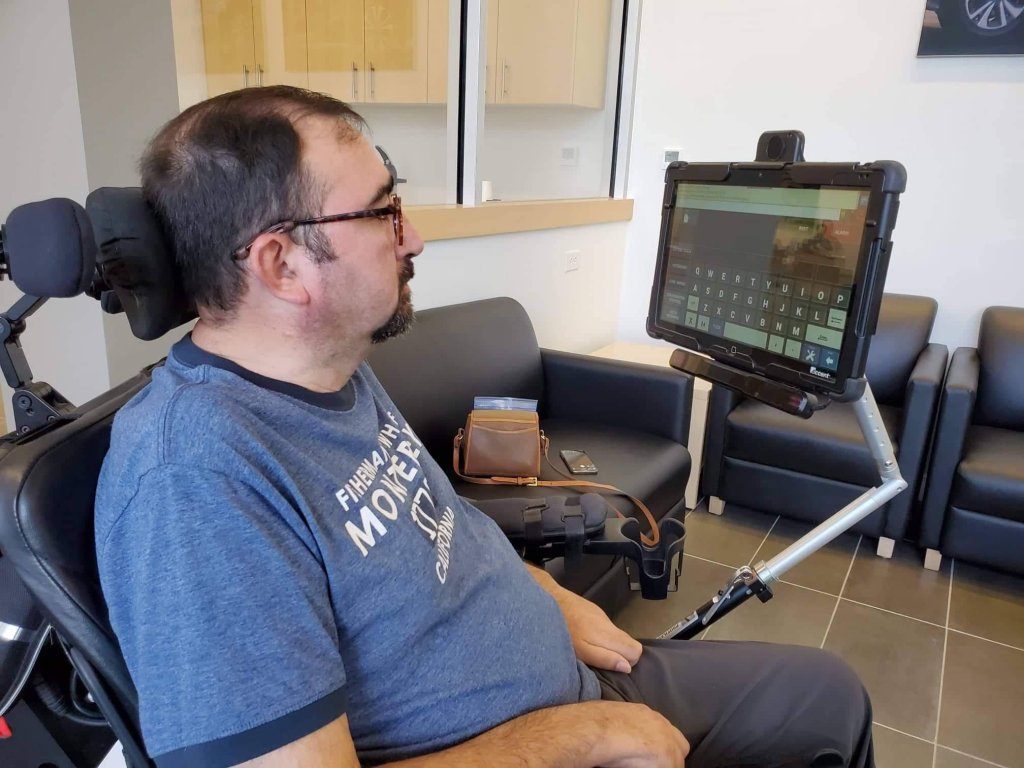
-Eyegaze: communication device that tracks eye movement and speaks your words for you.
–Letterboard: low tech communication board that uses a grid of the alphabet and eye movement

Now I know that I’ve painted a rather bleak outlook with the future of your progression, I’m simply not sugar coating it. However, as with any flip of a coin, there are two sides! Ultimately it’s both luck and choice, both require active participation. All of these effects of ALS can be mitigated with adaptations to your care. Many choose to implement all, some or none of these interventions. All options are personal and must be respected, thus the importance of honest and uncomfortable discussions regarding end of life wishes. Sorry, took a dark turn again, I’m trying to turn this post around and end on a positive note…but damned if ALS just won’t let me!!

Oh well, I will post a positive image to make up for it.

More to come…

The Juan and Only

ALS, muscle mass and body temperature. 🌡️❄️

As I perused social media when I was diagnosed I noticed images of patients under mountains of covers. I often wondered why? Now I know.

As our condition progresses our body looses muscle mass and as we move less and less we don’t generate body heat. Thus requiring more layers to stave off a cool environment. What may feel comfortable to you, may be very cold to us.

Muscles in general can generate body heat by simply flexing, shivering and by simply metabolizing fat and muscle tissue. You can see the obvious correlation here to weight and muscle mass. Just like more senior persons; a more sedentary lifestyle and decreased body mass brings on heightened sensitivity to changes in temperature.

A secondary effect of cold temps for pALS is it’s effect on spasticity. These highly”tense” moments can and often are preceded by a very exaggerated yawn.

What? No that’s ridiculous!

Ask a pALS if they yawn when cold, not to mention getting rigid, spazing out!

How can becoming sensitive to cold be troublesome? Well if you have a spouse that runs on the warmer side, arguments over the thermostat setting can ensue… “who changed the temp?” It wasn’t me! Or was it?

Damn it, now I’m hot!

So you have ALSWhat can you expect…(Part 5)

Now that we sat for a spell, caught our breath and digested the mountain of information that is ALS. Let’s reflect on something that should be hitting right about now…Grief.

ALS, grieving and mourning our future.

Grieving when you experience a loss is a natural process of life. Especially when you lose a loved one. But what do you do when you lose the life you had planned on, the life you dreamt of spending with your loved ones? Your still very much alive it’s just that you have to alter all of your future plans.

What do you do in this situation…? You mourn, you experience anger, denial, bargaining and everything else that comes along with it. Having experienced this personally with a diagnosis of ALS I can imagine that many if not all patients go through the same process. The moment Meg and I left the clinic after receiving the news our minds were abuzz with a whirlwind of questions. Meg being a planner, I’m sure was already wondering what plans we have to put in place to deal with this. These thoughts we’re only superseded by the thought of having to break the news to our children and family.

After the news settled in we went about our lives starting to plan and think of changes we would have to consider. At the same time that I was diagnosed we were invited to attend a support group and the annual walk to defeat ALS. Our emotions were to raw to consider attending either. Eventually we worked up the courage to attend the support group. It turned out to be one of the best decisions since being diagnosed.

Meg and I reflected on the advice we received from other families and decided to talk and discuss the importance of a unified approach. So what has changed for us? For starters I had to retire permanently in order to arrange future benefits for Meg and our children. Meg has to consider early retirement to care for me. Barring any incredible discoveries in the treatment of ALS in the immediate future I also realized I may not see my children grow up into adults.

We are in the process of making memories such as destination vacations. So far we have been on two cruises and 9 years ago before my diagnosis we had an Incredible 2 weeks RV trip up to Mount Rushmore, Yellowstone, Colorado and New Mexico, it was amazing. I even went skydiving six months after diagnosis. Yes our life has changed inextricably and forever. But has it ended? Hell no!!

Let’s take a moment to focus on just the caregiver, shall we.

ALS is a very labor-intensive medical condition, what do I mean by this? Well simply put, it requires a lot of time and attention to the patient. This is wholly dependent on the severity of the pALS condition and how advanced it is. The more advanced the more minute by minute care that is needed. Of course the whole point of this is to sustain a decent quality of life for the patient.

Because of the intensity of the Care needed by the patient it is very common for the caregivers to become overwhelmed. Although grieving begins at diagnosis the focus on care by the caregiver can interrupt the natural course of this process. Coupled with the desire to not leave their loved one for any amount of time it can become untenable for this to continue unchecked. Most of the time it’s because there is no one else to take their place.

Grieving in this instance becomes incremental; mourning the loss of function, speech, touch, independence and even friendships. Mourning the life you had planned for your self or each other.

Im tired, let’s take a break.

More to come…

The Juan and Only

So you have ALS What can you expect…(Part 4)

Alright, so far we have touched on diagnosis, treatment paths and the language of ALS. To be honest we’ve simply dipped our toes into these dark waters. Dark waters that can mimic a warm embrace, not because we can feel comfort in its embrace, but because it numbs us with it’s chokehold.

Oh my you’ve taken a dark turn Me. Juan and Only.

Yes I have, why you may ask? Because ALS is dark, scary, suffocating and ultimately liberating, I will get to that later.

The dark and scary…

“I’m sorry you have ALS”
“There are no treatments or a cure”
This leaves us without hope in the medical establishment. So why engage? Because it, the medical establishment, can and does help us and our families cope with the daily trauma of ALS. Every day we experience anticipatory loss, what next, when? Until what we anticipate loosing in fact is lost.

So what can you expect?
Is ALS painless? Yes, but not its effect on the body and our minds. As it shapes our bodies against our will, it is painful. Strictures, frozen joints, out of control emotions and the pain in our families eyes…but ALS is painless (my ass).

But how will our lives change? That’s what we really want to know?
Change? No it won’t, “change” is not apropos! I will let you choose the word, I have a slew of expletives myself, lol.

ALS will change you though, some changes good, some not. The obvious changes will require you to depend on others for EVERYTHING. These changes will be painful not because your body is at odds with itself, but because you are at odds with yourself. You will however, if you allow it, appreciate time and moments much more. You will also meet amazing souls, many of which are battling ALS themselves. Once again I encourage you to surrender, not to ALS, but to the love and support offered and given. Don’t get me wrong, ALS is a shitty condition. There’s plenty of reminders every day, most are unpleasant, some embarrassing and many simply necessary.

You have two options ultimately; focus on what you lose, or focus on what you still have. To be honest the balance is between both. But it’s perfectly alright to be off balance, trust me your family will pull you back to center, whether you want it or not. You’d be surprised what a slap on the head from your wife will do, ha!

Don’t fight ALS, fight to live, fight for moments, fight for each other!

Let’s sit for a moment before we continue on this journey, catch our breath.
More to come…

The Juan and Only

So you have ALSWhat can you expect…(Part 3)

Our journey continues…

Now that we have addressed the initial assault and the paths before us, let’s meander through the language of ALS. Let me preface this by saying that some terms are established and some are unique to our community, the ALS community.

ALS: Ameotrophic Lateral Sclerosis
MND: Motor Neuron Disease (how ALS is referred to outside the US)
ALS/MND is a syndrome within what are known as Neurodegenerative Conditions.
Within ALS there are two main categories: Bulbar Onset and Limb Onset. In essence the brain and the body. Neither are mutually exclusive, either one can occur independently or simultaneously. If onset is one or the other eventually it will evolve to both.

Slow Progression -v- Rapid Progression.
Here is the rub…you can have both, no really you can. Slow progression can include plateaus and it can also include episodes of rapid loss. I don’t assign time frames, the definition of fast or slow is subjective. Fast progression is well, fast, you must take into account how long diagnosis took. Rapid can be from days, weeks and months, I’m referencing to loss of abilities and function and ultimately the inevitable. Sadly there is no rhyme or reason as to who or why one or the other.

pALS & cALS: abbreviations for Person or Caregiver of someone living with ALS. Not accepted by all, but it prevents writing the longer terms.

fALS: Famelial ALS, the persons afflicted with the generational genetic form of ALS, hereditary.
vALS: Veteran with ALS

Clinical Trials: A structured research program developing targeted treatments for a disease (s); all require patient participants for human safety.

ALS-FRS-R: An ALS questionnaire-based scale that measures and tracks changes in a person’s physical function over time.

PEG/Mikey/Button: A feeding tube. The name refers to the style of tube; normal profile-long tube or low profile (button).

BIPAP: Bilevel Positive Airway Pressure, may improve respiratory function. In ALS it is intended to prolong diaphragm function and aid in CO2 exchange.

Tobii Dynavox/Augmentative Communication Device/Eyegaze Computer: A computer/tablet augmented with technology that allows navigation on the computer by tracking eye movement. These devices have advanced to allow a person not just to communicate but to also control their environment.

Ok, I think I’m done for now. These are some of the terms you will most likely immediately hear as you begin your journey. There will be many more to learn, before you know it you’ll be fluent in ALS-speak. It’s not a language anyone ever wants to learn, it is a must to navigate ALS though.

More to come…

The Juan and Only
So you have ALSWhat can you expect…(Part 2)

Let’s continue, shall we.
Now that you’ve had a moment to catch your breath and clear your search history on everything ALS, what’s next?

Several paths will present themselves: 1. Accessing an ALS Clinic (Center of Excellence), 2. If a veteran, accessing a VA ALS clinic and your benefits, 3. Pursuing alternative health care, independently or combined with traditional medicine, lastly 4. No treatments or therapies.

All of the above are choices that are deeply personal and must be respected. However, and I mean this sincerely, your choice requires consensus by your support network, a.k.a. family. Why, in case you are unaware, you will require total care and support, no one escapes this, regardless of rate of progression. The blunt reality of ALS is that none of us know how it will progress for each of us. There will be some who offer their insights as to onset, progression and a slew of other aspects regarding ALS. Tread carefully is the only thing I will say.

Once you choose though, depending on that choice, you can and will alter your approach as needed. Remain hopeful that therapies are imminent, remain open minded and keep your options open.

This brings me to the topic of clinical trials. In my humble opinion, trials are not designed well for us but they are evolving with pressure from our community. The reason to participate in trials, hope! Hope that the therapy meets our needs. I could give you a bunch of figures and science, let’s be honest none of that matters, all we want is a chance.

I will end part 2 with…
ALS has introduced itself to you and is becoming an important aspect in your life. But for a very small percentage, you are and will continue to be the same person. One major difference, your physical limitations require you to surrender to the love and support you’re surrounded by. If you are blessed to have such support. For there are many who either don’t or loose it entirely.

More to come,

The Juan and Only

So, you have ALS.What can you expect…(Part 1)

Initially: shock, dismay, numbness, fear, confusion, anger and a slew of many more emotions. You and your family will also experience information overload and I mean a Tsunami of information. This will be followed by questions, queries, exhaustive online searches and lists. Lists of questions, resources, leads, suggestions and websites.

Ok! Catch your breath, breath, exhale…breath…

Now that two days have passed, collect yourself, continue to breathe. Now what do you need to focus on? No really, ask yourself what is pressing at this very moment?

Safety? Have you experienced falls? What can help mitigate this?
Speech, swallowing, choking? Who can advise on this? Technology to consider? Interventions?
Long term care?
Benefits? Veteran y/n?
Work, job?
Living accomodations, accessibility?
In home care, aid?
In essence what do you need to address now versus what can wait for a bit?

What else to expect, stay tuned I will follow up with more. Remember it’s only been a few days I don’t want to overwhelm you.

I will share that you can expect this community to support you, virtually hug you and guide you. For we share this journey with you.

The Juan and Only

ALS Wheelchair Bubble’s

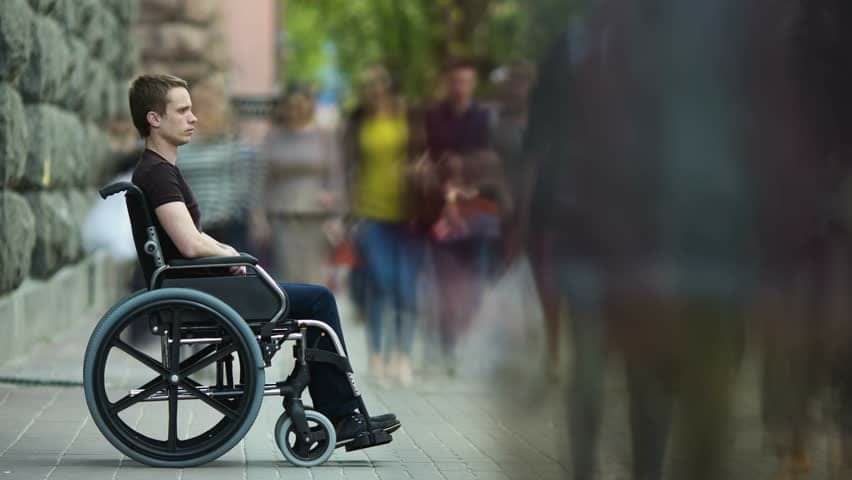
Moving through crowds, navigating a busy room, even in the serenity of your home, you feel alone when sitting in a wheelchair. I’m not talking about depression, although that is a very valid concern for many, especially during the holidays. No, I’m talking about the feeling of being in a bubble.

It’s hard to express, let’s call it “The ALS Wheelchair Bubble”. What is the wheelchair bubble, you ask?

This construct of my imagination, is an invisible barrier we, the wheelchair bound, experience both physically and mentally.

The physical:
Toe Crusher Bubble; the safe distance circumferentially to your wheelchair, whereby those around you and their, shins, knees and toes are safe. Victims quickly learn the value of this bubble.

The, “is it contagious bubble”; this bubble has become less hurtful due to Covid. Nevertheless, this bubble consists of the able body person having an irrational fear of “catching” the imaginary “wheelchair virus”. So they keep a safe distance, this bubble also creates the urge to speak loudly. So as to bridge the void.

Technophobia bubble; this one is rather straight forward. The perceived safe distance from technology. The powerchair, eyegaze and ventilator are devices that can elicit fear in the uninitiated. Although they would be coveted by a Steampunk aficionado.

The Mental
This is in essence the internal dialogue we have, this is where we meet ourselves. This bubble is self imposed, it’s our self image.

Perspective Bubble; our actual perspective has been modified to that of our chairs height. We now look up at our peers, eliciting feelings of inadequacy. “I am no longer who I used to be.” Which in many “physical” ways we are not. However, we are still the person(a) we have always been. With one exception, our self perception.

Self Preservation Bubble; the self imposed force field we create to keep from being hurt. This tends to manifest in an outward affect of: depression, anger, grumpiness, and general unapproachability. Which I suppose is the intended effect.

Alone in a Crowd Bubble; this one is due to our believing that there is no one that understands ALS unless they have ALS. That no one can truly know what we are going through. In a sense this is true, but it doesn’t mean others can’t empathize. This belief can and often does, make us feel alone in a crowd. Truth is, we are not. And we are not the only ones that experience this phenomenon.

So as we navigate through life in our wheelchair, remember bubbles aren’t just for kids. We often use bubbles to cope with life.

Have a bubbly day!

TJ&O

Holidays with ALS

What ever you celebrate during this season, one thing for certain, with ALS it’s just not the same.

I used to put the lights up, put together the tree, even decorate the house. Cook up a storm, help my wife wrap gifts past midnight. My one wrap job to her three, lol. But we shared the, even though she may argue with the split. I for one won’t argue that point.

It’s challenging to sit by and watch as the world fly’s by, whizzing past us. As if we are in slow motion and those around us are on fast forward. It seems like this, but truthfully it’s just the way our mind copes with living in a lame body.

Yes it hurts to be a witness rather than an active participant. However, being a witness is still being present. With ALS, being present is what we have left. This is the gift…time, moments, minutes, memories.

What ever you and your family celebrate during this season, I wish you love, peace and many more memorable moments.

From our family, Merry Christmas!

J Reyes

CREEP

Child Recognizance Elf Enforcement Program, AKA CREEP, is once again in full effect.

This program is designed as a seasonal disciplinary structure ensuring tiny terrorists mitigation. Utilizing time tested techniques perfected by Army PSYOPS. Techniques based on deception, subterfuge, surveillance and mental manipulation. Essential to successful execution of CREEP is total commitment. One must ignore the pintsize protagonists cries and pouting at all costs.

Enrollment in CREEP is simple, many retail outlets offer kits cleverly disguised as cute Elves. This creates a false sense of security in the micro-marauders. Unaware that these disarmingly cute characters are highly advanced surveillance drones.

Don’t wait to get yours, they quickly fly off the shelf.

Ensure cult like compliance in your holiday hoodlums with your personal CREEP Kit.

No Guarantees, No Refunds

CREEP a registered TJ&O Product